
What is AIDC? A Practical Guide for Business Decision-Makers
What Is AIDC? A Plain-English Guide for Business Decision-Makers
Every time a package lands on your doorstep with perfect tracking history, every time a hospital nurse scans a wristband before dispensing medication, every time a retailer knows exactly how many units are left on shelf — AIDC is doing the work behind the scenes. You might not have heard the term before, but if your business moves physical goods, manages assets, or runs any kind of operational process, you're either already using it or about to need it.
So, What Exactly Is AIDC?
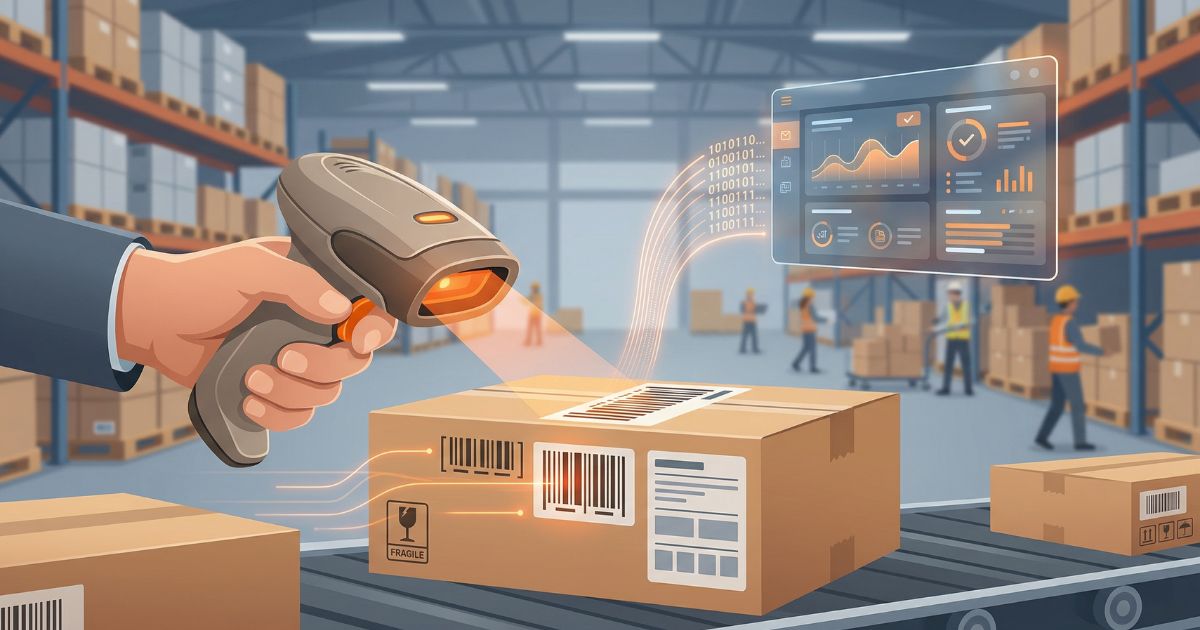
AIDC stands for Automatic Identification and Data Capture. Strip away the jargon and it means this: technology that reads information from a physical object — a label, a tag, a surface — and gets that data into your system without anyone typing it in by hand.
That last part matters more than it sounds. Manual data entry is slow, and it makes mistakes. Studies consistently put manual input error rates at around 1 in every 300 keystrokes — which sounds minor until you're running 10,000 warehouse transactions a day. AIDC eliminates that problem at the source.
The Main Technologies Under the AIDC Umbrella
AIDC isn't a single technology — it's a category that covers several different approaches, each with its own strengths:
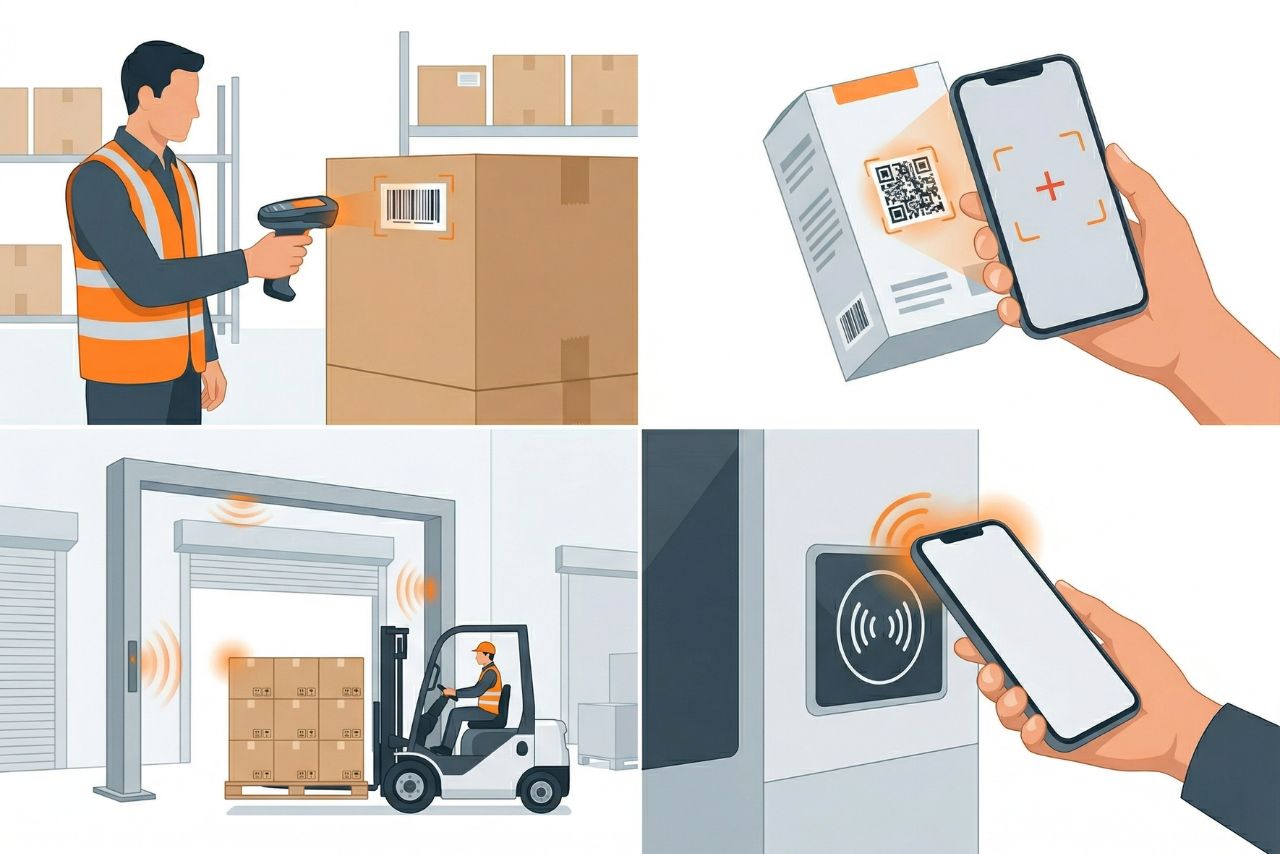
Barcodes (1D)
The classic linear barcode. Fast, inexpensive, and universally understood. Best for high-volume, line-of-sight scanning where simplicity and speed are priorities.
2D Codes (QR Codes, Data Matrix)
Packs significantly more data into a small space and often includes error-correction capability, so it may still be readable even when partially damaged. Common in manufacturing, healthcare, and anywhere you need to encode more than just a product number.
RFID (Radio Frequency Identification)
Uses radio waves instead of light, so no line-of-sight needed. A reader can capture data from multiple tags simultaneously. Higher upfront cost, but powerful for large-scale asset tracking and supply chain visibility.
NFC (Near Field Communication)
A short-range subset of high-frequency (HF) RFID designed for close-proximity interactions. Common in access control, contactless payments, and consumer product authentication.
Each of these gets its own dedicated guide later in this series. For now, the important thing is knowing they all fall under the same AIDC umbrella — and that your choice between them will depend on your specific operational requirements.
Why Does AIDC Matter for Your Business?
Three reasons, in plain language:
- Speed. A barcode scanner captures data in milliseconds. A person typing the same information takes several seconds — and that gap compounds across thousands of daily transactions.
- Accuracy. Human error in data entry is well-documented and costly. AIDC reduces it to near zero at the point of capture.
- Visibility. When every item, asset, or shipment is tracked in real time, you stop guessing and start knowing — where things are, how many you have, and where the process is breaking down.
Where Is AIDC Being Used Right Now?
- Warehousing and logistics: Receiving, put-away, picking, packing, and shipping — AIDC underpins every step.
- Retail: Point of sale, inventory replenishment, loss prevention, and omnichannel fulfillment.
- Healthcare: Patient identification, medication administration, lab specimen tracking, and medical device management.
- Manufacturing: Work-in-progress tracking, quality control, component traceability, and finished goods verification.
- Transportation and delivery: Last-mile tracking, proof of delivery, and fleet asset management.
How Do You Know Which AIDC Technology Is Right for You?
There's no universal answer, but there is a logical way to think about it. Three questions will get you most of the way there:
- What environment will the hardware operate in? Dusty warehouse floor, sterile hospital room, and outdoor loading dock all have different requirements.
- What are you trying to read, and from what distance?
- What does your existing system infrastructure look like? AIDC hardware needs to talk to your WMS, ERP, or POS — compatibility matters.
These questions are the foundation of any good AIDC buying decision. For a more detailed framework, head over to our Buyer's Guide.
The Bottom Line
AIDC is not a single product you buy. It's a category of technology that, when matched correctly to your operation, quietly and reliably makes everything run better. If you're just getting started, the best first step is understanding which AIDC technology fits your environment and your workflow. That's exactly what the rest of this series is designed to help you figure out.